
Robust pig supply to start year
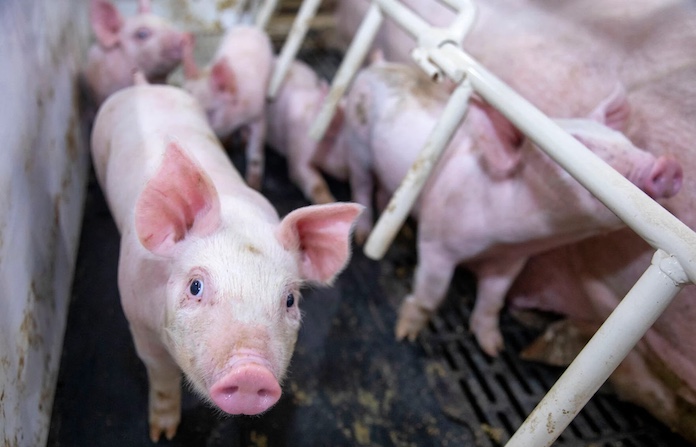
With more profitable hog prices, lower feed costs and higher production efficiency compared to recent years, the U.S. has an ample supply of pork to start 2026.
USDA’s quarterly hogs and pigs report on Dec. 23 pegged the nation’s hog herd at 75.5 million head, up 1 percent from a year ago and a slight uptick from September. Breeding inventory, at 5.95 million head, was down 1 percent on the year while market hog inventory, at 69.6 million head, was up 1 percent.
The September-November 2025 pig crop was estimated at 35 million head, a record high for the quarter.
Rich Nelson, chief strategist with Allendale Inc., had been looking at the hog reports with skepticism throughout 2025 because USDA made a lot of revisions, which was also true of the December report.
But it showed no signs of a supply crunch for the next few months.
“They suggested farrowing numbers hitting in the second half of 2026, maybe a little more aggressive than we expected to see (up 2 percent),” Nelson told FarmWeek. “So, we’re going to have no real supply issues for 2026, a moderate bump up in numbers for the first half of the year and a good increase in numbers for the second half of the year.”
Producers also topped the overall record for pigs saved per litter last quarter at an average 11.93, up from 11.92 a year ago. The prior two years, the same figure was up 2 percent and 4 percent.
“Even though we’ve only lightly expanded the hog herd as a whole in the past five to seven years, we’ve added 7 percent to these pigs per litter numbers, which has really kept the supply argument reigned in,” Nelson said. “We’re really not looking at a tight supply story here for this U.S. pork market right now.”
Despite a neutral supply story in 2025, prices were around $90 per hundredweight, the best price in about three years.
“We have reduced feed costs with these lower grain prices in 2025 as a whole, so we will manage a light to minimal profit for U.S. hog production,” Nelson said.
But feed costs are something he will continue to keep an eye on in 2026.
“We’re watching this grain market very closely, and it comes off these recent lows, and a lot of questions, certainly for 2026,” Nelson said. “We already have some forecasts suggesting maybe some light weather issues here for late spring and early summer next year. Will that mean lower yields?”
On the demand side, Nelson said there hasn’t been much of a shift by consumers from higher priced beef to pork or chicken.
“That was a story three to four decades ago but, for right now, beef is still holding a good premium, and we haven’t seen a significant amount of consumer pushback on the beef side,” he said.
But there is still a positive view for U.S. pork demand.
“We do expect that to continue into 2026, despite the fact there’s concerns regarding the U.S. consumer,” Nelson said. “So overall, even though we have a lightly higher supply environment for now, demand is actually a little better than expected here.”
This story was distributed through a cooperative project between the Illinois Farm Bureau and Illinois Press Association. For more food and farming news, visit FarmWeekNow.com.