State of State breakdown
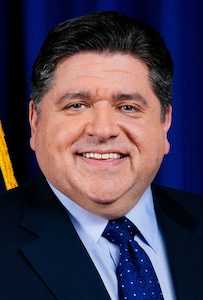
Affordability, housing and conflict with the federal government were among key topics discussed by Illinois Gov. JB Pritzker during his annual State of the State address last Wednesday in Springfield.
Alongside the address, Pritzker proposed a state budget for fiscal year 2027 amounting to $56 billion which, compared to previous years, is a relatively small increase from the prior year’s $55.2 billion budget.
A Feb. 18 article from Peter Hancock with Capitol News Illinois provides an overview of the budget proposal, with a substantial chunk of new revenue intended to come from a proposed Social Media Digital Platform Fee.
The tax would require social media tech companies selling Illinois user data to pay fees based on their number of monthly users, with platforms of over 1 million Illinois users paying $165,000 per month plus $0.50 per month on the number of users beyond 1 million.
When it comes to priorities in the proposed budget, education remains at the top with $15.4 billion allocated. This is followed by $11.2 billion for human services, $8.8 billion for healthcare, $6.5 billion for K-12 pensions and $5.4 billion for public safety.
Compared to last year, education is set to receive $1.6 billion more, with human services seeing a reduction of $777 million and healthcare likewise being cut by $520 million.
Returning to funding for the proposed budget, Pritzker noted during his address conflict with the federal government regarding withholding of federal funding.
About $1 billion in child care funding is currently being pursued by Illinois as the state sues to continue receiving those funds, though Pritzker indicated the total amount of federal funds the state has lost totals around $8.4 billion.
“Alongside many other states, Illinois is fighting more than 50 cases in court where the federal government is illegally confiscating money that has already been promised and appropriated by the Congress to the people of Illinois,” Pritzker said. “These are not handouts. These are dollars that real Illinoisans paid in federal taxes and that have been constitutionally approved by our elected Democratic and Republican representatives in Washington.”
Speaking about education, the governor spoke to the benefits of Illinois’ regular increases to education funding.
He pointed to an increase in the state’s high school graduation rate and participation in career and technical education growing to nearly 300,000 students.
“The Nation’s Report Card compares all 50 states, and the results are clear,” Pritzker said. “Illinois is among the best in the nation. Only one state outpaced Illinois in eighth grade reading scores, and only four states outpaced Illinois in eighth grade math scores. We’re leading the pack because of sustained investments in education.”
Housing was a major area of focus for Pritzker during his address as he proposed a statewide zoning law meant to heavily limit local zoning authority.
He announced the “Building Up Illinois Developments” plan, a pursuit to “lower housing costs by making it easier, faster and more cost-effective to build homes in Illinois.”
“In many places, local regulations have made it too difficult and costly to build new housing,” Pritzker said. “Some of the rules even have shameful roots that go back to the days of redlining. Often, the problem is a failure to modernize and keep up with the changing times we live in. It all adds up to bureaucratic red tape that unnecessarily increases costs, delays construction, and frequently kills projects altogether.”
The particular legislation in question, Illinois House Bill 5626, prevents the restriction of single-family zoning by local municipalities.
At least one detached single-family dwelling must be allowed on residential lots of less than 2,500 square feet.
For lots between 2,500-5,000 square feet, four dwelling units must be allowed. That number is six for lots between 5,000-7,500 square feet, and lots larger than 7,500 square feet must allow up to eight dwellings.
Among other items, the bill also mandates the allowance of accessory dwellings in all zoning districts that permit single-family dwellings.
As a Feb. 18 article from Brendan Moore with Capitol News Illinois details, this legislation also includes a general cutting of red tape in regard to local barriers for housing development.
Pritzker also proposed $250 million in funding to accompany this legislation, with $100 million put toward a grant program for utility and other site prepwork, $100 million earmarked for multi-unit housing development and $50 million split between a home ownership cost assistance program and a program for folks who have faced student loan debt barriers to home ownership.
Other topics broached in Pritzker’s address included general affordability for Illinoisans and the development of new nuclear power and other clean energy in the state.
Local Republican politicians offered criticism following Pritzker’s address, with State Sen. Terri Bryant taking issue with the proposed budget and the governor’s pointing at President Donald Trump as a reason for the state’s lack of funding.
“State spending has increased nearly 40 percent since he took office. Has the income of Illinois families increased by 40 percent? Of course not,” Bryant said. “What families are seeing instead are higher energy bills, some of the highest property taxes in the country, and an economy that continues to lag behind the nation.”
Speaking further on funding, Bryant mentioned the Illinois Department of Corrections, referencing one staff member – a relative of hers – who “was sent to the ICU after being exposed to an unknown substance while on the job.”
While Bryant responded to the address via press release, State Rep. David Friess posted on Facebook about the state’s lack of financial support for municipalities, remarking on Pritzker’s complaints about the federal government withholding funds to the state.
“I found his complaint comical due to the fact that local municipalities are owed money via the Local Government Distributive Fund,” Friess said. “The LGDF is a key mechanism by which state income tax revenue is distributed to local municipalities and counties.”
This fund, he said, was originally 10 percent of total state income tax collected, though this was reduced in 2011.
Locally, affordable housing and multi-unit dwellings have been something of a concern for Monroe County in recent years.
Nathan Krebel with the Waterloo Zoning Office suggested that the state’s BUILD legislation would likely have little effect in the city immediately, though changes could arise over time should the proposal come true.
Regarding the limitation of municipalities to restrict detached dwellings, he remarked that only one or two individuals have pursued such a permit with the city in the years he’s been at City Hall, noting the cost of adding utilities and other necessities for a separate dwelling on a property.
“I think if this passes, you’re not gonna see an abundant amount of people rushing into City Hall saying, ‘Hey, I want a permit to do this,’ because it’s extremely expensive to build anything,” Krebel said.
On the similar relaxation of multi-unit construction, he likewise suggested developers likely wouldn’t suddenly add new apartments in single-family zoning districts.
“No one’s gonna do that in Remlok,” Krebel said. “No one’s gonna propose an apartment building in a subdivision, so I just don’t know how much of an effect this will have in Waterloo.”
In Columbia, Land Use and Planning Coordinator John Brancaglione noted that no recent or ongoing projects would be affected by the proposed legislation.
He commented on the interest in multi-unit housing within the city’s comprehensive plan, though he emphasized the city hasn’t been eager to place such housing in the middle of single-family residential zones.
“You just don’t take a piece of what was developed as a single-family development with the intention of that development ultimately expanding over time and decide you’re gonna build a multi-family building there because now you’re affecting traffic patterns,” Brancaglione said.